
The Rise of Prefab and Precast Concrete in Commercial Construction
– By #Lester-Robbins Construction
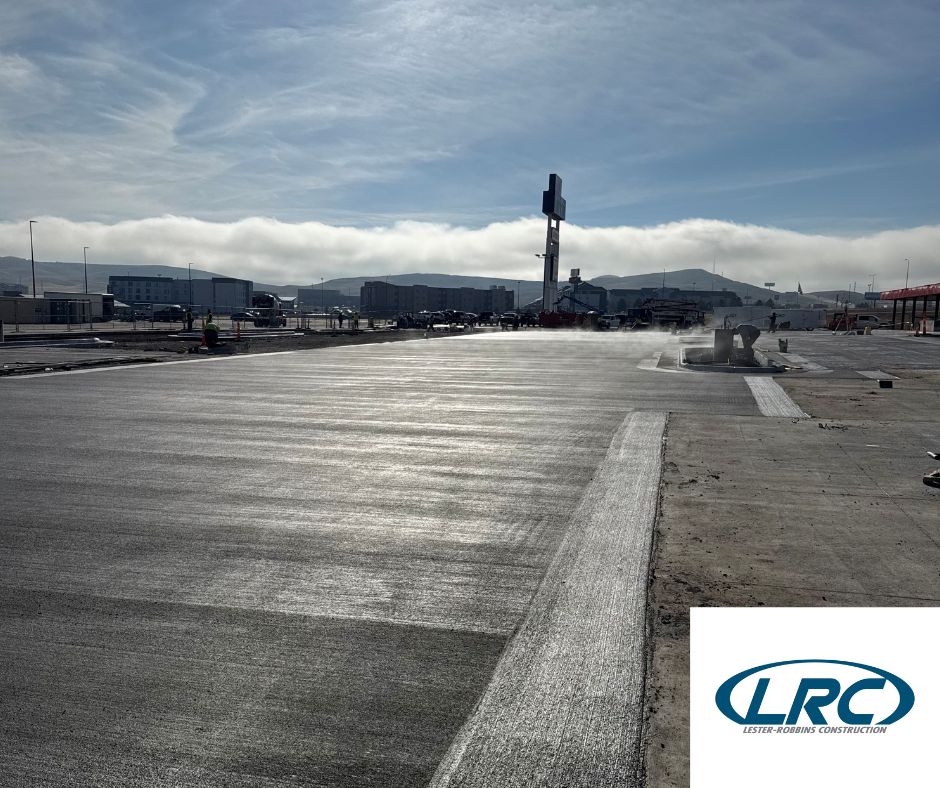
Across the country, owners and developers are accelerating schedules and improving reliability by shifting core building elements from the jobsite to the plant. The rise of prefab and precast concrete in commercial construction reflects a practical response to labor constraints, weather volatility, and the need for predictable outcomes. When precast concrete production runs in parallel with sitework, projects dry in faster, interiors stay protected, and costs are easier to control. This guide explains what prefabrication and modular construction mean in practice, where the biggest gains occur.
Prefab and Precast, Defined
Prefab concrete refers to concrete elements manufactured off site in a controlled plant and delivered for installation. Precast is a key category within that approach: components are cast in reusable forms, cured under supervision, and shipped ready to set. In a prefabricated commercial building, common precast elements include wall panels, beams, columns, double tees, hollow-core slabs, stairs, and architectural cladding.
Compared with cast-in-place methods, precast concrete production shifts most variables indoors. That change enables accurate forming, monitored curing, and repeatable runs with consistent tolerances. Many projects also combine prefabricated construction with steel or light-gauge frames to create hybrid modules that arrive as shop-built assemblies for rapid installation. These prefabrication and modular construction strategies shorten critical paths and reduce rework, particularly in weather-sensitive regions.
Decades of innovation have matured the field. Today’s plants utilize high-performance mix designs, prestressing, fiber reinforcement, and insulated sandwich panels. Digital tools, including building information modeling and model-to-fabrication workflows, help engineers and precasters coordinate connections, embeds, and logistics well before trucks roll.
Why Owners Choose Precast: Cost, Time, and Quality
Owners are embracing the rise of prefab and precast concrete in commercial construction because the approach delivers predictability without compromising performance. The most consistent precast concrete benefits include:
- Budget control: Plant standardization reduces waste and streamlines field operations. While some elements may carry higher fabrication costs than site-cast equivalents, total installed cost often declines once reduced formwork, fewer site labor hours, shortened general conditions, and fewer weather delays are included.
- Schedule compression: Precast concrete production occurs while foundations and utilities are placed on site. Once delivered, crane crews set panels and members quickly, accelerating enclosure and protecting interior work. Faster dry-in helps follow-on trades start sooner and supports earlier revenue.
- Consistent quality: Calibrated batching, controlled curing, and reusable forms yield reliable dimensions, strengths, and finishes. Prestressed members can span longer distances with slimmer profiles, improving space planning. The result: durable performance with dependable fire resistance, acoustics, and long-term serviceability.
These precast concrete benefits are most visible on schedule-driven projects and on sites where minimizing disruption is a priority. For many owners, prefabrication and modular construction deliver a clear path to dependable outcomes.
Sustainability and Environmental Performance
A plant environment enables material efficiency that is difficult to match on open jobsites. Components are cast to exact dimensions, offcuts are minimized, and reusable molds spread material inputs across many cycles. Centralized precast concrete production also reduces the stop-and-start energy use typical of multiple small pours on site and lowers the frequency of rework.
Many producers incorporate supplementary cementitious materials, recycled steel reinforcement, and recycled aggregates where appropriate. Closed-loop water systems can reduce freshwater demand, and regional sourcing for aggregates and cementitious materials helps limit transport impacts. For projects pursuing green benchmarks, insulated panels, thermal mass, and verified material documentation support energy performance and construction credits.
Where Time and Cost Savings Come From
Owners often ask for the line-item reasons that prefabricated construction and modular construction improve delivery. The most consistent drivers are summarized below.
|
Factor |
Precast/Modular Approach |
Impact on Schedule and Cost |
|
Parallel workstreams |
Plant fabrication while sitework proceeds |
Shorter critical path and earlier enclosure |
|
Weather resilience |
Concrete casting moves indoors to the plant |
Fewer weather delays and predictable output |
|
Standardized details |
Repeatable forms and connection details |
Lower rework and faster installation |
|
Factor |
Precast/Modular Approach |
Impact on Schedule and Cost |
|
Reduced site labor |
Rapid crane setting of panels and members |
Fewer labor hours and tighter general conditions |
|
Quality control |
Calibrated batching and supervised curing |
Consistent performance and fewer punch items |
On industrial, healthcare, education, office, and retail projects, these efficiencies add up to faster openings and reliable budgets. It’s why prefab concrete continues to gain share in commercial work and why a prefabricated commercial building strategy is increasingly part of early planning.
Design Flexibility and Aesthetic Options
Modern plants can deliver more than plain panels. Architects can specify formliners, pigments, exposed aggregate, thin brick, and polished finishes to achieve high-impact façades. Insulated sandwich panels improve energy performance, and embedded connections simplify attachment of secondary systems. When prefabrication and modular
construction are considered early, teams can preserve architectural intent while standardizing repeating elements for speed.
For long spans, prestressed members and hollow-core slabs optimize structural depth and reduce column counts. In mixed-use settings, precast podiums support lighter upper levels, including steel, light-gauge, or mass timber framing. These hybrids bring the speed of prefab concrete to a broad range of building types.
Trends to Watch
Automation and digital coordination continue to expand what precast can deliver. Robotic form preparation, automated rebar tying, and laser-guided casting improve throughput and consistency. BIM-to-fabrication pipelines standardize connections and prevent conflicts before materials are poured. Embedded sensors offer real-time insight for structural health monitoring, improving long-term asset management.
On the design side, expect more expressive façades, slender members enabled by advanced mixes, and wider use of insulated wall systems in climate-sensitive markets. As owners pursue speed and resilience, a prefabricated commercial building strategy paired with modular construction methods will remain a core path to meeting schedule and sustainability goals.
Frequently Asked Questions
How flexible is precast design? Quite flexible. Plants support custom forms, textures, pigments, embedded connections, and integrated insulation. Early coordination preserves design intent while standardizing repetitive elements for speed.
Are there height limits? Precast is common for low- to mid-rise structures, parking, and podiums. For taller buildings, it often serves as cladding or within hybrid frames. Feasibility depends on spans, lateral systems, and connection design.
Does weather affect feasibility? Because most work moves into the plant, production proceeds year-round. On site, rapid erection shortens exposure to adverse conditions and protects interior trades.
What about transportation constraints? Piece size, weight, and route clearances drive planning. We work with producers and haulers to set realistic dimensions and delivery windows. For remote sites, staged deliveries and local crane resources help control costs.
What maintenance is required? Similar to other concrete systems: periodic joint sealant renewal, façade cleaning, and connection inspections. Quality detailing and durable sealants extend service life.
Your Next Step
When your project includes prefabricated or modular components, the quality of the cast‑in‑place concrete work that supports those elements is critical. At Lester‑Robbins Construction, our team ensures that foundations, slabs, and structural concrete are built with the precision these systems require. We coordinate closely with project partners to align layouts, tolerances, and installation sequencing so modular and prefabricated assemblies integrate smoothly on site.
Whether you’re planning a new build, expansion, or renovation, our cast‑in‑place concrete services provide the stability, accuracy, and long‑term performance every successful prefabricated or modular project depends on.
Last Modified: